It was through ignorance that war was used in the final stages of Earth's process of struggle to reach the Moon. That was possibly the only reason war was ever used at all. Had there not been that almost unknown, supernal goal, it is possible few wars would ever have been fought.
The question boils down now to whether to use war as an instrument of planetary self-government in the future, or not.
The past half-billion years of dinosaur-filled primitive evolution eventually was ended by human constructions-that first and suddenly attained the Moon only decades ago; during billions of years of future, life on Earth will never be the same.
The magnitude of changes now taking place are beyond estimation. Almost nothing is known except that, as many are fond of saying, "Enough war". Earth is tired of war. Scarred and polluted with war, still frantic from it, people all over the world wonder what impels the almost desperate ambitions to justify life as if life needs justification. Building great projects is a neurotic, unfeeling ritual, a rut of habit based on the ancient goal unremembered because of its then-mysterious nature. Whole cities, industries, nations and militaries are still constructed out of monotonous habit.
In each new generation, millions of young people are taught to have the ambitions of pre-Apollo goal-seeking, Spartan regimentation and the European merchant class. Nations are still, again, preparing for totally unecessary future war in numb ritual even as they celebrate new organizations and agreements which they fully intend and hope to honor, even as the no longer existing ancient formless compulsive goal of first attaining the Moon has already dissipated in the sudden, quick, brief success of the Apollo project like smoke on the water.
It's too bad that so many stubbornly, out of sheer pernicious envy or surprise, perhaps because they wanted to be the one's to go to the Moon, refuse to accept the fact of its success. Often they do not seem to accept the fact that, even if the "stories" about the Moon were fiction, they are awesomely close to the half-guessed truth known since primordial times, and the new 'stories' fit all of nature perfectly.
In that light the parallel is visible between two great streams in history. Chinese Taoist civilization was largely sedentary in that it remained in China, adhered from the first to the natural world, and interpreted it slowly and with great care through probability and changes. Technological progress was slow, at a natural rate and no attempt was made to hurry it.
It is a common, stupidly aggressive and monstrously irresponsible Romanesque military habit to invariably cast China's history as inferior or slow. China's role was cautious continuation of the prehistoric patience from proven evolutionary progress, nothing else; it was the conservative branch.
The common, beer-laden Western military mind, on seeing the timelines of China and the Egyptian-Mediterranean-European branch compared, to aggressively gesture with its weapons and say, "Yeah, we got there first, and we get to beat the s*** out of them". That is like a muscle-headed farm kid going out to climb a mountain, kill a bear, or defeat an enemy and on success, returning to the farm, and saying, "You didn't go out to climb and kill and defeat, so we get to beat you out of the world." The common, sheer idiot error is to forget completely that it was planet Earth that went to the Moon, that the Moon does not merely orbit the United States, America, Europe, the Mediterranean, Italy, Rome or Egypt.
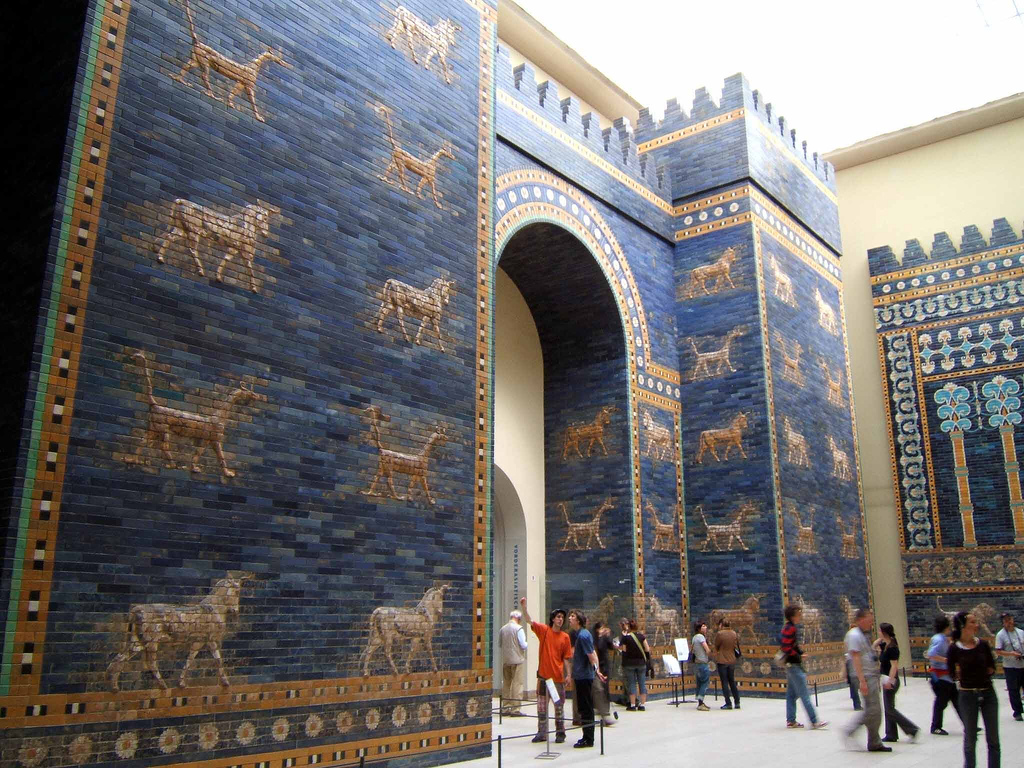
Egyptian constructionist dynasties were ambitious in raising masses up through heights to the form famous, durable pyramids, and first estimated the energy of lifting a ship to the Moon. Egypt made from the start a very large mistake which would not be discovered until recently: it knew nothing of the mass-energy equivalence. But it eventually spread out through the Middle East and Mediterranean to Europe, bringing unnecessary war with it wherever it went.
Trade existed between the two realms, and inventions in each were carried to the other. From the same prehistoric origin, two different phases in different orders of progress by different means led to the same goal, the same Moon. You take the one road and I'll take the other road and we'll meet on the Moon together.
Eventually the Moon was reached, with immense losses of life and property. Wars were fought, almost certainly unnecessary wars in the light of whole-world judgement, until the very last. War had been used as a cruel instrument of research. At the very last, the world began reaching hurriedly toward ancient dreams of world-wide peace, communications, transportation and agreement, even automatic translation devices, like the Google Translate on this page, were sought and attained.
The sudden success is breathtaking. No reason now exists to pursue blindly any course toward any imaginable future goal. Yet even now, people in the rut of war are building their private, profit-seeking empires of war machines, hoping for more war, insisting that it must occur despite the facts of history and the hopes of billions of persons. Most of the population of the Earth just wants peace and time to figure out what's true and make it better. They want neighborhood gardens throughout every city, not bombs. They want a chance to tend their own lives, and gardens are at the very heart of the issue, not capricious jobs for capricious factories.
Resolving the balance between gardens and employment cannot be accomplished by one person, particularly not this starry-eyed writer. Yet one thing is clear; if governments do not permit individual persons and families, and small groups of these to form something closer to the nature of homes they can keep and gardens that provide them significant amounts of food, the problems will continue in the same monotonous, unnecessary (except for the Moon) way as they have in the past. Already success is being attained in those domestic factors; people just want freedom to cultivate the family and village scale of habitation in the loveliness of this planet and world.
Saturday, November 13, 2010


Wednesday, November 10, 2010
Return to Normal Stability
I started this search looking for what the initials URS symbolizes. Consider, for instance, the existence of UPS and its military green trucks. Consider the United States a military and construction area for the ancient evolutionary goal of flights to the Moon.
It won, and brought the news that there are no truly deep surprises on or in the Moon. Not for human beings and their institutions, not even for crocodiles or the other ancient animals. The Moon is not heaven, neither is it hell.
On the success of those flights, global assimilation of the entire, ancient planetary project began, and is under way through, primarily, national, corporate, financial, military and other gigantic entities throughout the world. It's not clear whether anybody is acting in any higher capacity to coordinate the assimilation, although clearly the United Nations is regarded with considerable respect by most or all of them, and is now regarded as a sort of ad hoc clearing house and central reference standard body by many.
It turns out things are looking better, not worse.
The approach most visible to Americans is that of the corporations, which are well known, as well as state governments, educational institutions and military.
In other countries it is not so obvious. It seems clear enough though that all are, in one way or another, taking stock of the situation in which they and the rest of the world have come to in the light of that success.
The primary character of the results of attaining space flight to the Moon and survey of the solar system is that there are few great surprises.
As is well known in the entertainment industry, there could have been, aliens all over the place, gods and monsters, and lush gardens in the other worlds, to which human beings would hurriedly flock in hurriedly designed space ships. Instead, no real point exists in building many space ships, and orbital space around the Earth has proved to be the only space locale so far that has turned any sort of profit. It is entirely possible that it will be hundreds or thousands of years before much is made of the other planets in the solar system, if ever.
Meanwhile, acting on instinct, life itself began energizing the most advanced human institutions - religion, military, government, corporation and all - to take action in responding to the results. That's all that is happening: human organization, poised for thousands of years, is suddenly busy putting the world back into the proper order. After all, getting to the Moon involved wars, population increase beyond instinct intentions, destruction of habitat, the extinction of many species and decimation of many others, and the despoiling of considerable quantities of the Earth's surface.
Nonetheless, it is a time for optimism. Ahead lay some additional coordination realms, such as agreements to tolerate each other where the entities doing the assimilation, coordination and return to normalcy are different. One good example is the contrast between China and the West, although China is quite in agreement on the main goal of returning to certain traditional, instinctive, ancient or even prehistoric order, and as that takes place in both regions of the planet, it becomes easier for both to cooperate. They have, for instance, much new modern truth to share, and as well, their own traditions and stability to recover.
Another example is Burma. It is hard to imagine anybody civilized in the western sense tolerating the regime in Burma, but that's what Burma is doing. On the other hand, it could be time to announce to the entire Burmese population that even their prehistoric dreams of tjavascript:void(0)he Moon have been resolved by actual photographs from several nations, several visits by human beings, carrying large bags of Moon rocks. True, they were not gold, jewels, diamonds and precious carvings, but hey, what the heck? Just the fact they are rocks might catch their attention.
It won, and brought the news that there are no truly deep surprises on or in the Moon. Not for human beings and their institutions, not even for crocodiles or the other ancient animals. The Moon is not heaven, neither is it hell.
On the success of those flights, global assimilation of the entire, ancient planetary project began, and is under way through, primarily, national, corporate, financial, military and other gigantic entities throughout the world. It's not clear whether anybody is acting in any higher capacity to coordinate the assimilation, although clearly the United Nations is regarded with considerable respect by most or all of them, and is now regarded as a sort of ad hoc clearing house and central reference standard body by many.
It turns out things are looking better, not worse.
The approach most visible to Americans is that of the corporations, which are well known, as well as state governments, educational institutions and military.
In other countries it is not so obvious. It seems clear enough though that all are, in one way or another, taking stock of the situation in which they and the rest of the world have come to in the light of that success.
The primary character of the results of attaining space flight to the Moon and survey of the solar system is that there are few great surprises.
As is well known in the entertainment industry, there could have been, aliens all over the place, gods and monsters, and lush gardens in the other worlds, to which human beings would hurriedly flock in hurriedly designed space ships. Instead, no real point exists in building many space ships, and orbital space around the Earth has proved to be the only space locale so far that has turned any sort of profit. It is entirely possible that it will be hundreds or thousands of years before much is made of the other planets in the solar system, if ever.
Meanwhile, acting on instinct, life itself began energizing the most advanced human institutions - religion, military, government, corporation and all - to take action in responding to the results. That's all that is happening: human organization, poised for thousands of years, is suddenly busy putting the world back into the proper order. After all, getting to the Moon involved wars, population increase beyond instinct intentions, destruction of habitat, the extinction of many species and decimation of many others, and the despoiling of considerable quantities of the Earth's surface.
Nonetheless, it is a time for optimism. Ahead lay some additional coordination realms, such as agreements to tolerate each other where the entities doing the assimilation, coordination and return to normalcy are different. One good example is the contrast between China and the West, although China is quite in agreement on the main goal of returning to certain traditional, instinctive, ancient or even prehistoric order, and as that takes place in both regions of the planet, it becomes easier for both to cooperate. They have, for instance, much new modern truth to share, and as well, their own traditions and stability to recover.
Another example is Burma. It is hard to imagine anybody civilized in the western sense tolerating the regime in Burma, but that's what Burma is doing. On the other hand, it could be time to announce to the entire Burmese population that even their prehistoric dreams of tjavascript:void(0)he Moon have been resolved by actual photographs from several nations, several visits by human beings, carrying large bags of Moon rocks. True, they were not gold, jewels, diamonds and precious carvings, but hey, what the heck? Just the fact they are rocks might catch their attention.
Sunday, November 7, 2010
Who Came First? Life or God
In secular likelihood, it is worth cultivating the concept of God because it appears to be an inevitable activity of human beings anyway, Those familiar with wildlife say the animals live close to prayer all the time, and the nearest more substantial concept is vigilance. Just where one draws the line between God and vigilance is often a matter of opinion, but seems to be close to the distinction between probabilities and molecular structures made of atoms.
Probabilities such as those of chance, gambling, gamboling, hazarding and others are intrinsically risky business. Even so, probability has paid off in insurance, which pools resources on the basis of probability of risk, and pays moneys to those who suffer loss as a result of unpredictable (or unpredicted) catastrophes. Because of that, it is difficult to protect insurance from evil gamblers, but important to do so because nervous angels profit much more by having good insurance.
In nature the distinctions had to be between self and others such as enemies, prey, predators, friends, tribe, herd and family - all difficult to distinguish in nature, although any skill at divination was helpful in survival.
Early life forms on Earth were little more than sludge or slime consisting of extensive molecular and cellular masses without much organization. Such masses did create environments, mainly smelly and tainted with refuse, offal and excreta. Even so, if a place smelled more of droppings from one's own species, it was probably more likely to be a safer than more dangerous place to be. As with procreation in any organism, the beginning of God was a smelly business. God, at first tentative, primitive, and only sporadically accessible, was with life perhaps billions of years ago.
Later, by inventing houses which could be closed against pests, marauding beasts, enemies and disease, they learned to cultivate godlike qualities that gave the household protection previously unattainable in trees and caves. Life became holy, at least for those who took care to cultivate holiness.
The cultivation of the spirit became important. Those who were good at it were quickly drawn into serving the entire group, which led to modern organization.
However much organization changes as a result of attaining the ancient goal of the Moon, human civilization will not abandon its most successful institutions. At the same time, liberty and freedom have taken on more extensive dimensions - consider the driving range of a new automobile or modern passenger airplane or ship.
In the same way, human civilization will not abandon all of religion, families,
democracy, communications, transportation, government, medicine or education - probably not ever. On the other hand, all are going through extensive changes for the simple but slow long-term reason that the past several thousand years were dedicated intensively to reaching the Moon. Nobody knew exactly what would be discovered. It might have been anticipated that what would be discovered had been familiar for hundreds of millions of years already.
But it was not, and toward the end of the race, advanced speculation seemed to indicate the world would be inundated by hungry space aliens bent on consuming human beings as food; OR, human beings would begin to engage in mass migrations to the stars where they would form colonies: OR there would be monstrous wars with each nation raining sophisticated weapons of mass destruction from space on each other's sacred cities and houses; or other highly imaginative prognostications. Few were content with the tranquil concept which was so close to the truth that was observed by astronauts and astrobots to the other planets of the solar system.
Almost more surprising is the vast utility of earth orbit. Communications, space tourism, weather surveillance, soil, mineral and crop surveys, temperature maps, wildlife observation, space astronomy and many other new, valuable purposes have emerged for putting specially designed equipment into orbit.
It's not worth spending much time on the question of which came first, life or god. The question is exactly like father's question of which came first, the chicken or the egg? Far more productive is the time spent on comprehending and understanding what has been attained, what were the successes of the past five or six or ten thousand years which led to designs and practices that will be perpetuated, and what were the errors that require careful, patient correction of the kind that should have
been taken long ago.
The early pyramid builders did construct manifest displays of the attainment of lifting heavy objects high above the Earth, and the total gravitational energy, as one measures it in, say, foot-pounds, is approximately equivalent to the energy that was eventually required to lift a man to the Moon. The energy required was supplied by human beings, their numbers not remembered, but they ate food. So much food was required to lift a block a certain distance. Similarly, other amounts of food were required to lift the same size block other distances. The food was fish and grains. Fish had the advantage that catching a live fish meant fighting with the fish's energy. Fish could jump so far above the water. People could jump above the Earth. A concept of biological energy existed. Construction of the pyramids allowed a visible manifestation of that kind of energy to be manifest during the
passage of such time as would be required for human beings to jump to the Moon.
Even so, an error exists. It is now known that a certain physical relationship exists between mass and energy. According to the Einstein equation, energy and mass have a relationship mathematically describable as Energy = Mass * c *c, where c is the speed of light. Earth pyramid builders had no rational idea of the speed of light, or that it was not infinite.
It is worth pausing now, having attained the Moon, to survey history for the existence of errors such as these, and inquire whether they are causing difficult in the present day or anticipated future. The sciences, mathematics, agriculture, medicine and many other fields are rich with powerful laws for the Judgment, but it does not require war any more. Pausing, perhaps, for centuries. Sometimes the dynasties of Egypt went into hiatus for such long periods of time. Earth could afford to let frantically compulsive, high-powered profit-driven industrial market design and manufacturing to lapse to the essentials of food, shelter and other vital productions. Just what those will be would be determined when, as the superfluous production is allowed to collapse, the essential necessities begin to show the core toughness of the will to live of the people, only this time, taking care to guard against making conflict of it.
Instead, the blessings of liberty must be allowed to flourish, and those of grace and justice as well. It is time to take somewhat more risk in extending trust to other nations and peoples, than was the custom during the centuries before footsteps on the Moon became real. Taking time to wade through years of negotiation to reach a point recognizable to both sides is possible now. Centuries lie before humankind as more or less determinable futures in the millions of years of unknown destiny. By now, it is known that enough air is likely to remain on Earth for, not mere millions of years, but probably hundreds of millions of years.
We might even get some sleep without worrying about imaginary futures, and cultivate our faith in real futures.
Probabilities such as those of chance, gambling, gamboling, hazarding and others are intrinsically risky business. Even so, probability has paid off in insurance, which pools resources on the basis of probability of risk, and pays moneys to those who suffer loss as a result of unpredictable (or unpredicted) catastrophes. Because of that, it is difficult to protect insurance from evil gamblers, but important to do so because nervous angels profit much more by having good insurance.
In nature the distinctions had to be between self and others such as enemies, prey, predators, friends, tribe, herd and family - all difficult to distinguish in nature, although any skill at divination was helpful in survival.
Early life forms on Earth were little more than sludge or slime consisting of extensive molecular and cellular masses without much organization. Such masses did create environments, mainly smelly and tainted with refuse, offal and excreta. Even so, if a place smelled more of droppings from one's own species, it was probably more likely to be a safer than more dangerous place to be. As with procreation in any organism, the beginning of God was a smelly business. God, at first tentative, primitive, and only sporadically accessible, was with life perhaps billions of years ago.
Later, by inventing houses which could be closed against pests, marauding beasts, enemies and disease, they learned to cultivate godlike qualities that gave the household protection previously unattainable in trees and caves. Life became holy, at least for those who took care to cultivate holiness.
The cultivation of the spirit became important. Those who were good at it were quickly drawn into serving the entire group, which led to modern organization.
However much organization changes as a result of attaining the ancient goal of the Moon, human civilization will not abandon its most successful institutions. At the same time, liberty and freedom have taken on more extensive dimensions - consider the driving range of a new automobile or modern passenger airplane or ship.
In the same way, human civilization will not abandon all of religion, families,
democracy, communications, transportation, government, medicine or education - probably not ever. On the other hand, all are going through extensive changes for the simple but slow long-term reason that the past several thousand years were dedicated intensively to reaching the Moon. Nobody knew exactly what would be discovered. It might have been anticipated that what would be discovered had been familiar for hundreds of millions of years already.
But it was not, and toward the end of the race, advanced speculation seemed to indicate the world would be inundated by hungry space aliens bent on consuming human beings as food; OR, human beings would begin to engage in mass migrations to the stars where they would form colonies: OR there would be monstrous wars with each nation raining sophisticated weapons of mass destruction from space on each other's sacred cities and houses; or other highly imaginative prognostications. Few were content with the tranquil concept which was so close to the truth that was observed by astronauts and astrobots to the other planets of the solar system.
Almost more surprising is the vast utility of earth orbit. Communications, space tourism, weather surveillance, soil, mineral and crop surveys, temperature maps, wildlife observation, space astronomy and many other new, valuable purposes have emerged for putting specially designed equipment into orbit.
It's not worth spending much time on the question of which came first, life or god. The question is exactly like father's question of which came first, the chicken or the egg? Far more productive is the time spent on comprehending and understanding what has been attained, what were the successes of the past five or six or ten thousand years which led to designs and practices that will be perpetuated, and what were the errors that require careful, patient correction of the kind that should have
been taken long ago.
The early pyramid builders did construct manifest displays of the attainment of lifting heavy objects high above the Earth, and the total gravitational energy, as one measures it in, say, foot-pounds, is approximately equivalent to the energy that was eventually required to lift a man to the Moon. The energy required was supplied by human beings, their numbers not remembered, but they ate food. So much food was required to lift a block a certain distance. Similarly, other amounts of food were required to lift the same size block other distances. The food was fish and grains. Fish had the advantage that catching a live fish meant fighting with the fish's energy. Fish could jump so far above the water. People could jump above the Earth. A concept of biological energy existed. Construction of the pyramids allowed a visible manifestation of that kind of energy to be manifest during the
passage of such time as would be required for human beings to jump to the Moon.
Even so, an error exists. It is now known that a certain physical relationship exists between mass and energy. According to the Einstein equation, energy and mass have a relationship mathematically describable as Energy = Mass * c *c, where c is the speed of light. Earth pyramid builders had no rational idea of the speed of light, or that it was not infinite.
It is worth pausing now, having attained the Moon, to survey history for the existence of errors such as these, and inquire whether they are causing difficult in the present day or anticipated future. The sciences, mathematics, agriculture, medicine and many other fields are rich with powerful laws for the Judgment, but it does not require war any more. Pausing, perhaps, for centuries. Sometimes the dynasties of Egypt went into hiatus for such long periods of time. Earth could afford to let frantically compulsive, high-powered profit-driven industrial market design and manufacturing to lapse to the essentials of food, shelter and other vital productions. Just what those will be would be determined when, as the superfluous production is allowed to collapse, the essential necessities begin to show the core toughness of the will to live of the people, only this time, taking care to guard against making conflict of it.
Instead, the blessings of liberty must be allowed to flourish, and those of grace and justice as well. It is time to take somewhat more risk in extending trust to other nations and peoples, than was the custom during the centuries before footsteps on the Moon became real. Taking time to wade through years of negotiation to reach a point recognizable to both sides is possible now. Centuries lie before humankind as more or less determinable futures in the millions of years of unknown destiny. By now, it is known that enough air is likely to remain on Earth for, not mere millions of years, but probably hundreds of millions of years.
We might even get some sleep without worrying about imaginary futures, and cultivate our faith in real futures.
Monday, November 1, 2010
Chaos and Order in the Ten Thousand Years
Creating global financial competence through multifarious economic defiles is the problem facing the monetary world.
Several fortunately identifiable errors in the conception of the natural world existed when the first massive constructions of geometrically designed architecture were completed and remained durable on the prehistorically established path to the Moon and Sun which recently became successful.
In other words, the ancient goals of reaching the Moon and at least understanding why we cannot stand on the Sun were completed, after six or eight thousand years of struggle which began with what is now obviously inadequate information.
The success was almost uneventful because the Moon and Sun had been exactly what they seemed to be throughout all the history of life on Earth. The reports from the several expeditions in the Apollo project were so accurate and anticipated, so deeply pre-acceptable, pre-understood and pre-comprehended, and although recently so predicted, that they almost seemed too pat, too easy, and thus in some sense potentially nothing more than predictions.
Yet they are true. The Moon is an airless, waterless small world orbiting the Earth, made of rock and covered with rock dust, too hot in the two week long day and too cold in the two week long night to survive.
The real problems lay in the immense chaos that exists in the preternatural constructions which we call civilization in the precursors of industrial market economies.
It is vital to scale the magnitude of the planet's entire situation, identify the realm of life throughout the Earth, distinguish it from the complex and emerging realm of constructionist civilization, and identify those parts of the whole which were misconstructions from those parts of the whole which are, in post-Apollo terms, likely to be stable and enduring factors in future economics.
At the outset, a best guess at the state of civilization is that it is half right, half wrong, a field day for both optimist and pessimist. As a starting point, it would fuel improvements for centuries. That means the Yin and Yang duality, fairly well practiced, is at least an acceptable part of reconstruction now that the great Understanding is attained. The world is not half bad, and has a great deal of good. Better yet, with modern concepts of statistical, informational and thermodynamic entropy, it is desirable to consider the possibility that civilization is half order, half chaos.
Nature is likely to be included for all future time among the goals of civilization, because however fragile it is, through its persistence it constitutes the origins of life on Earth, even civilized life. Nature cannot constitute the foundation of civilization; it is not strong enough, and is too delicate, too fragile. Nature is the origin of civilization. Just the same, civilization is not the origin of nature. Civilization already does create events to which nature adapts. Therefore it can be said that civilization changes nature. So far the changes which civilization introduces to nature are not predictable. They consist often of death by pollution; life which survives by surviving pollution is likely to be competitive in subtle ways not easy to anticipate.
For instance, even the question of whether nature will now proceed to evolve more sophisticated silicon life forms, beyond siliceous Diatoms, Hexannelid sponges and Equisetum weed plant into organisms that actually use silicon in dynamically active organic processes such as thought, is often posed. Yet it is not known whether nature or civilization will create the breakthrough adaptation, and in the end, whether that will matter at all.
The outcome may be a fifty million year period of intense competition between exclusively carbon based life forms and life forms using both elements in its dynamics. Considering what silicon carbide is like, the silicon-carbon organisms which emerge in the extremely distant future will be hard as nails and tough as rawhide.
The half chaos, half order situation can always, we now know, be bettered within the walls and protections of human constructions, yet it will always be an exogenous factor, within which the better interpretations of the universe must be within the walls of the cities and their houses. That means sheer chaos will always be an outer limit to economic theory, and the way money behaves when it does, will be within the protection of accounting and finance and the walls of banks and households.
Several fortunately identifiable errors in the conception of the natural world existed when the first massive constructions of geometrically designed architecture were completed and remained durable on the prehistorically established path to the Moon and Sun which recently became successful.
In other words, the ancient goals of reaching the Moon and at least understanding why we cannot stand on the Sun were completed, after six or eight thousand years of struggle which began with what is now obviously inadequate information.
The success was almost uneventful because the Moon and Sun had been exactly what they seemed to be throughout all the history of life on Earth. The reports from the several expeditions in the Apollo project were so accurate and anticipated, so deeply pre-acceptable, pre-understood and pre-comprehended, and although recently so predicted, that they almost seemed too pat, too easy, and thus in some sense potentially nothing more than predictions.
Yet they are true. The Moon is an airless, waterless small world orbiting the Earth, made of rock and covered with rock dust, too hot in the two week long day and too cold in the two week long night to survive.
The real problems lay in the immense chaos that exists in the preternatural constructions which we call civilization in the precursors of industrial market economies.
It is vital to scale the magnitude of the planet's entire situation, identify the realm of life throughout the Earth, distinguish it from the complex and emerging realm of constructionist civilization, and identify those parts of the whole which were misconstructions from those parts of the whole which are, in post-Apollo terms, likely to be stable and enduring factors in future economics.
At the outset, a best guess at the state of civilization is that it is half right, half wrong, a field day for both optimist and pessimist. As a starting point, it would fuel improvements for centuries. That means the Yin and Yang duality, fairly well practiced, is at least an acceptable part of reconstruction now that the great Understanding is attained. The world is not half bad, and has a great deal of good. Better yet, with modern concepts of statistical, informational and thermodynamic entropy, it is desirable to consider the possibility that civilization is half order, half chaos.
Nature is likely to be included for all future time among the goals of civilization, because however fragile it is, through its persistence it constitutes the origins of life on Earth, even civilized life. Nature cannot constitute the foundation of civilization; it is not strong enough, and is too delicate, too fragile. Nature is the origin of civilization. Just the same, civilization is not the origin of nature. Civilization already does create events to which nature adapts. Therefore it can be said that civilization changes nature. So far the changes which civilization introduces to nature are not predictable. They consist often of death by pollution; life which survives by surviving pollution is likely to be competitive in subtle ways not easy to anticipate.
For instance, even the question of whether nature will now proceed to evolve more sophisticated silicon life forms, beyond siliceous Diatoms, Hexannelid sponges and Equisetum weed plant into organisms that actually use silicon in dynamically active organic processes such as thought, is often posed. Yet it is not known whether nature or civilization will create the breakthrough adaptation, and in the end, whether that will matter at all.
The outcome may be a fifty million year period of intense competition between exclusively carbon based life forms and life forms using both elements in its dynamics. Considering what silicon carbide is like, the silicon-carbon organisms which emerge in the extremely distant future will be hard as nails and tough as rawhide.
The half chaos, half order situation can always, we now know, be bettered within the walls and protections of human constructions, yet it will always be an exogenous factor, within which the better interpretations of the universe must be within the walls of the cities and their houses. That means sheer chaos will always be an outer limit to economic theory, and the way money behaves when it does, will be within the protection of accounting and finance and the walls of banks and households.
Friday, October 22, 2010
The Falls of Man, or Why the Children are Curious
Somewhere between sensitive and obvious, Neanderthals fell without the benefit of warning; a particular group of their descendants became Homo Sapiens.
It's probably no surprise to some that the Fall of Man, depicted in famous art works and by theologians since - well, the Fall - is best equated with the phasing out of the Neanderthals, probably by a remarkably successful group of their offspring. Of course the transition then from the Neanderthals was not marked by specific, egregrious, onerous and insufferable violations of God's laws as the events during the most recent few thousand years which signaled the fall of Mankind. Stories like that of Cain and Abel are sufficiently equivalent to be of similar import: they may refer to groups, even very large groups, constituting species, as well as to individuals.
This has some meaningful real-world implications. Neanderthals fell, and the Church says that Man has already fallen. It's only a matter of time before the next group of dominant creatures, probably much like us in some ways, will have such different genetic codes in its chromosomal nuclei that no mating between the two would be possible. Wondering why I felt like an old coot, it's not just me after all.
Nothing symbolized the current Fall more distinctly than the Crucifixion of Christ, nor the rise, both preceding and following it, of great constructions and inevitably (because it was an evolutionary and instinctive goal) the attainment of the Moon.
Attainments and failures by the Neanderthals, while identifiable as an ability to survive almost anywhere and wielding materials in tools and weapons that were too big and clumsy, do not involve such distinct events. Even so, some of the same patterns exist. Modern humans can survive anywhere and already do, yet are extravagantly wasteful of massive quantities of the Earth's resources, and unconscionably savage in the rapacity with which the Earth's living creatures are slaughtered by industrial machinery for foodstuff as if they are so much dirt.
The parallels must be drawn more carefully and completely than is possible by this one author. It is vital from the beginning to equate any extinction of the human species with the Fall of Man described by the priests, because first, that is the eternal theater or arena which is compreheded by religion and it is already highly sophisticated at exactly that; and second, because human beings are now setting out (even though their children are now wireless) to begin a million or ten million years of Planethood, easy.
If the scenarios are well coordinated so that they can be presented as potential yet differing pre-concepts, then the concept can emerge without specific written dedications - as it should, because new people must be born in liberty. If the scenarios are neglected or ignored or badly presented, they will do nothing of value, and the next species of human beings will be clumsy in some other unredeemable way only to find itself in its own Fall, and watching its children doing something new which their parents don't understand.
The measures of the Earth, its people, and other factors are already being understood and compiled well. It only requires being tolerant of those setting out in the new directions. This is not so easy as it sounds for an old warlike civilization with a lot of blood on the hands of its species. Men still worry whether their kids will be good soldiers or better yet, generals and admirals. They worry whether their children are going into space rapidly enough.
Instead, it has to be taken into account that the great space adventures are thousands of years in the future, potentially more. The Solar System has nothing worth hurried development of, except for aggression against somebody else on Earth. On the Moon and other planets in this our Solar System there is no farmland arable or not; no breathable air, no open water, no life of any sort. Only the Moon and Mars even have solid surfaces on which to stand at temperatures that will not kill within minutes, and neither of them has any significant atmosphere.
To comprehend the scale on which no evidence has been found of any signals from transmissions in space almost requires a degree in electronic communications. The sensitivity of the receivers is astonishing, and they continually and minutely scrutinize every wavelength in existence.
This does not mean that those facts must be ignored forever, but the plain real actual honest truth is, there is no good reason to waste money going to the Moon or Mars or any other place in the Solar System, while Earth has the problems that it has. To be obsessively complete, there is no way to even TRY to reach any other star system yet.
Many, many people, apparently all fools, stack ifs like they were layers of cake and popcorn, to conclude that despite those facts, nations should be heavily or not, investing valuable money, time, coordination, human dreams, imagination, cooperation and planning in going to the Moon and Mars with the intention of colonizing those places. The most urgent schedule that can be made for flights to these two places at the present time is to solidly and believably confirm, for the benefit of all the people on Earth, that the reports by the United States, Russia and Japan are true. Gaining that credibility by the sheer integrity of each nation that goes visiting there is truly and vitally important for the whole world's peace of mind.
Beyond that, little more importance can be given to space flight beyond the Moon, a reasonable preferred limit to human space flight for now. Robots to the planets are okay; they seem to endanger no one and tend to be increasingly successful. Eventually when it is a piece of cake, human flights will take place throughout the solar system, but they could wait until technological development reaches a sophistication not yet met by human beings. For instance, exploration of the solar system wants a space ship with the resources to roam at will if necessary, and dispatch landing craft to the surfaces of other planets and moons. It would have to be equivalent preceptually to, say, fusion powered interplanetary space ships with antigravity, or something like that.
Orbital flight around the Earth already pays for itself and is certainly worth its investments in communications, weather, soil, land surface and oceanic surveys and every other kind of knowledge about the Earth. It's not at question. Strangely, it should not be necessary to fend of defensive people who obsessive so much about the need for massive human aggression into space that they attack even on just thinking about the factors involved in making policy. Some seem obsessed with the idea that space aliens must be lurking in every Moon shadow. Still others are utterly convinced the United States is lying about the Moon in its meticulous and candid reports, and falsifying information about nonexistent alien spacecraft, life in canyons or caves, and other crap. I know one person who insists there must be an inner world within the Moon where gardens exist, in which zebras, monkeys, antelopes, animals and crocodiles and alligators must surely live.
Yeah, right.
Some of the most surprising nations are among the most offensive in filling the entertainment world's fertile imaginations with an insistent regime of dogma that we must hurry to prepare defenses against - you can probably see it coming - space aliens. The worst is our own parent, England, which has given some kind of licence to the British Interplanetary Society to trump up UK sovereignty over all the Earth on the basis that only England can provide the sophisticated moral basis for government and negotiations with the new Galactic Empire. Oh, good.
Russians are not bad about developing such nonsense themselves, but they never call it down even when it misleads millions of people. Americans are possibly the most difficult though maybe I see it that way because I am one. We not only tolerate the British invention of fantastically funny, imaginative plot lines like Dr. Who and Red Dwarf, but add to it bathtub plunges like Stargate SG-1...n and weird journeys through tunnels. These and other superviolent shows provide the Pentagon with lots of material to spice up arms and weapons development, which was already way way way way WAY over the top in 1946. But just in case, The War of the Worlds, The Day the Earth Stood Still, the Martian Chronicles, and other Doom From Space theater is available so that Christians can deal with any competing religion.
The problems are so big, Man, that the only path from this species to the species that rules the Earth for millions of years will be through the worm tunnel.
It's probably no surprise to some that the Fall of Man, depicted in famous art works and by theologians since - well, the Fall - is best equated with the phasing out of the Neanderthals, probably by a remarkably successful group of their offspring. Of course the transition then from the Neanderthals was not marked by specific, egregrious, onerous and insufferable violations of God's laws as the events during the most recent few thousand years which signaled the fall of Mankind. Stories like that of Cain and Abel are sufficiently equivalent to be of similar import: they may refer to groups, even very large groups, constituting species, as well as to individuals.
This has some meaningful real-world implications. Neanderthals fell, and the Church says that Man has already fallen. It's only a matter of time before the next group of dominant creatures, probably much like us in some ways, will have such different genetic codes in its chromosomal nuclei that no mating between the two would be possible. Wondering why I felt like an old coot, it's not just me after all.
Nothing symbolized the current Fall more distinctly than the Crucifixion of Christ, nor the rise, both preceding and following it, of great constructions and inevitably (because it was an evolutionary and instinctive goal) the attainment of the Moon.
Attainments and failures by the Neanderthals, while identifiable as an ability to survive almost anywhere and wielding materials in tools and weapons that were too big and clumsy, do not involve such distinct events. Even so, some of the same patterns exist. Modern humans can survive anywhere and already do, yet are extravagantly wasteful of massive quantities of the Earth's resources, and unconscionably savage in the rapacity with which the Earth's living creatures are slaughtered by industrial machinery for foodstuff as if they are so much dirt.
The parallels must be drawn more carefully and completely than is possible by this one author. It is vital from the beginning to equate any extinction of the human species with the Fall of Man described by the priests, because first, that is the eternal theater or arena which is compreheded by religion and it is already highly sophisticated at exactly that; and second, because human beings are now setting out (even though their children are now wireless) to begin a million or ten million years of Planethood, easy.
If the scenarios are well coordinated so that they can be presented as potential yet differing pre-concepts, then the concept can emerge without specific written dedications - as it should, because new people must be born in liberty. If the scenarios are neglected or ignored or badly presented, they will do nothing of value, and the next species of human beings will be clumsy in some other unredeemable way only to find itself in its own Fall, and watching its children doing something new which their parents don't understand.
The measures of the Earth, its people, and other factors are already being understood and compiled well. It only requires being tolerant of those setting out in the new directions. This is not so easy as it sounds for an old warlike civilization with a lot of blood on the hands of its species. Men still worry whether their kids will be good soldiers or better yet, generals and admirals. They worry whether their children are going into space rapidly enough.
Instead, it has to be taken into account that the great space adventures are thousands of years in the future, potentially more. The Solar System has nothing worth hurried development of, except for aggression against somebody else on Earth. On the Moon and other planets in this our Solar System there is no farmland arable or not; no breathable air, no open water, no life of any sort. Only the Moon and Mars even have solid surfaces on which to stand at temperatures that will not kill within minutes, and neither of them has any significant atmosphere.
To comprehend the scale on which no evidence has been found of any signals from transmissions in space almost requires a degree in electronic communications. The sensitivity of the receivers is astonishing, and they continually and minutely scrutinize every wavelength in existence.
This does not mean that those facts must be ignored forever, but the plain real actual honest truth is, there is no good reason to waste money going to the Moon or Mars or any other place in the Solar System, while Earth has the problems that it has. To be obsessively complete, there is no way to even TRY to reach any other star system yet.
Many, many people, apparently all fools, stack ifs like they were layers of cake and popcorn, to conclude that despite those facts, nations should be heavily or not, investing valuable money, time, coordination, human dreams, imagination, cooperation and planning in going to the Moon and Mars with the intention of colonizing those places. The most urgent schedule that can be made for flights to these two places at the present time is to solidly and believably confirm, for the benefit of all the people on Earth, that the reports by the United States, Russia and Japan are true. Gaining that credibility by the sheer integrity of each nation that goes visiting there is truly and vitally important for the whole world's peace of mind.
Beyond that, little more importance can be given to space flight beyond the Moon, a reasonable preferred limit to human space flight for now. Robots to the planets are okay; they seem to endanger no one and tend to be increasingly successful. Eventually when it is a piece of cake, human flights will take place throughout the solar system, but they could wait until technological development reaches a sophistication not yet met by human beings. For instance, exploration of the solar system wants a space ship with the resources to roam at will if necessary, and dispatch landing craft to the surfaces of other planets and moons. It would have to be equivalent preceptually to, say, fusion powered interplanetary space ships with antigravity, or something like that.
Orbital flight around the Earth already pays for itself and is certainly worth its investments in communications, weather, soil, land surface and oceanic surveys and every other kind of knowledge about the Earth. It's not at question. Strangely, it should not be necessary to fend of defensive people who obsessive so much about the need for massive human aggression into space that they attack even on just thinking about the factors involved in making policy. Some seem obsessed with the idea that space aliens must be lurking in every Moon shadow. Still others are utterly convinced the United States is lying about the Moon in its meticulous and candid reports, and falsifying information about nonexistent alien spacecraft, life in canyons or caves, and other crap. I know one person who insists there must be an inner world within the Moon where gardens exist, in which zebras, monkeys, antelopes, animals and crocodiles and alligators must surely live.
Yeah, right.
Some of the most surprising nations are among the most offensive in filling the entertainment world's fertile imaginations with an insistent regime of dogma that we must hurry to prepare defenses against - you can probably see it coming - space aliens. The worst is our own parent, England, which has given some kind of licence to the British Interplanetary Society to trump up UK sovereignty over all the Earth on the basis that only England can provide the sophisticated moral basis for government and negotiations with the new Galactic Empire. Oh, good.
Russians are not bad about developing such nonsense themselves, but they never call it down even when it misleads millions of people. Americans are possibly the most difficult though maybe I see it that way because I am one. We not only tolerate the British invention of fantastically funny, imaginative plot lines like Dr. Who and Red Dwarf, but add to it bathtub plunges like Stargate SG-1...n and weird journeys through tunnels. These and other superviolent shows provide the Pentagon with lots of material to spice up arms and weapons development, which was already way way way way WAY over the top in 1946. But just in case, The War of the Worlds, The Day the Earth Stood Still, the Martian Chronicles, and other Doom From Space theater is available so that Christians can deal with any competing religion.
The problems are so big, Man, that the only path from this species to the species that rules the Earth for millions of years will be through the worm tunnel.
Saturday, October 16, 2010
Cost of the Moon
From this observer's view of the slow fine energy terms throughout the elements in evolution, it appears the trillion dollar deficit in the United States is in phase with more factors if it is viewed as the realization of the monetized vast economic outlays required to go to the Moon recently, than any of the short term factors to which it is so commonly attributed.
Those outlays spanned all of agriculture, housing, industry, transportation, war and other factors. Some of these may be described in different ways by different persons of course.
The important thing is that the energy terms, which are trade-offs under the action with chronological and geological time, are in the same range of values and scales in nature - molecular spectra in the quantum electrodynamics of evolution, and in the long slow rotation of the celestial spheres - as the thousands of years old dynastic efforts to reach the Moon, more than anything else.
To be sure, the flights to the Moon were justified by all and everything having to do with human existence. Life began washing back and forth toward and away from the Moon billions of years ago in the tides, even shaping the evolution of Man. The Moon appears to have been the essential cause of construction of the Pyramids and all the empires and events since then. That is why it is vital to make as much of the opportunity to bring the world to common, sound understanding of the nature of Peace, if that can be.
It could be that the United States and other countries are still poised on the brink of violent resistance or worse, if any sign of opposition to the attainment of the Moon appears. Along with potential terrestrial opposition, defense against superstitiously anticipated space aliens from other worlds was included (as in the tanks versus the flying saucers in "Day the Earth Stood Still", "War of the Worlds" and "Mars Attacks") and fortunately the alien threat never panned out. Those at least are ideas that should be among the resources of peacemakers who should be respected by militarists.
In other words, there never were any space monster aliens and in fact never will be, yet it was such extensive superstition that even modern militaries were galvanized against that kind of threat. Nobody on Earth needs that kind of nonsense any more.
Those outlays spanned all of agriculture, housing, industry, transportation, war and other factors. Some of these may be described in different ways by different persons of course.
The important thing is that the energy terms, which are trade-offs under the action with chronological and geological time, are in the same range of values and scales in nature - molecular spectra in the quantum electrodynamics of evolution, and in the long slow rotation of the celestial spheres - as the thousands of years old dynastic efforts to reach the Moon, more than anything else.
To be sure, the flights to the Moon were justified by all and everything having to do with human existence. Life began washing back and forth toward and away from the Moon billions of years ago in the tides, even shaping the evolution of Man. The Moon appears to have been the essential cause of construction of the Pyramids and all the empires and events since then. That is why it is vital to make as much of the opportunity to bring the world to common, sound understanding of the nature of Peace, if that can be.
It could be that the United States and other countries are still poised on the brink of violent resistance or worse, if any sign of opposition to the attainment of the Moon appears. Along with potential terrestrial opposition, defense against superstitiously anticipated space aliens from other worlds was included (as in the tanks versus the flying saucers in "Day the Earth Stood Still", "War of the Worlds" and "Mars Attacks") and fortunately the alien threat never panned out. Those at least are ideas that should be among the resources of peacemakers who should be respected by militarists.
In other words, there never were any space monster aliens and in fact never will be, yet it was such extensive superstition that even modern militaries were galvanized against that kind of threat. Nobody on Earth needs that kind of nonsense any more.
Cultural Infrared
Whole villages of houses, trees, paths and bridges drew one's vision to the near infrared of campfires as evening changed into night during thousands of years of time.
China is often interpreted as red, and has what is called in English, a ruddy aspect. One can even see it when looking at Chinese cities on Google Maps Satellite. The implication is that China conceives itself in the INFRARED. Just what part of the spectrum that is will require gentlemanly, polite, courteous, civil scrutiny by specialists in color perception, atomic spectra, and probably several other distinct fields.
It is well known as possible, to train one's eyes to see a shade more deeply in both the ultraviolet and the infrared edges of the visible spectrum; on inquiring of others, they concur. In practice, few persons strain to see every perceptible wavelength clearly. That leaves a region of the spectrum which is still within, on the infrared edge from 700 millimicron to 800, less than twice the wavelength of the 400 mmu ultraviolet limit. While both limits are fuzzy, the violet edge is more sharply bounded. An attractive goal is development of LED's that are bright in the 700-720 millimicron near infrared part of the spectrum, just beyond the edge of the conventionally visible.
As one gradually sees the shapes of a room and its furnishings in the near infrared, the Chinese concept becomes more explicable and common-sense.
Both infrared and ultraviolet regions of the spectrum are hot political issues ancient in both government and religion. Many different animals see in the infrared or ultraviolet, and different plants are responsive to those wavelengths as well. One wonders what Unicorns see.
It would be well worth the time and money to determine just how far into the infrared people perceive-and conceive-their environments and of course, themselves, each other, and foreign groups.
A suspicion is that even if people do not actually see in the infrared, they may have evolved a concept of their world, or at least perhaps its durable forms and structures, through interpretation of heat radiation during centuries or thousands of years of time.
Different social groups may see more or less clearly at 730 or 750 millimicrons than is commonly assumed. During hostilities, it would be stupid to allow others to know one can see in the infrared. In peacekeeping, it might be well to find out.
One harmless test would be to ask volunteers to traverse a maze that is illuminated with infrared light, and account the time required, at different wavelengths of infrared for them to find the exit. This could be entertainment at a carnival.
Might save some bloodshed. It is in the ultraviolet and infrared that many fears are hatched.
China is often interpreted as red, and has what is called in English, a ruddy aspect. One can even see it when looking at Chinese cities on Google Maps Satellite. The implication is that China conceives itself in the INFRARED. Just what part of the spectrum that is will require gentlemanly, polite, courteous, civil scrutiny by specialists in color perception, atomic spectra, and probably several other distinct fields.
It is well known as possible, to train one's eyes to see a shade more deeply in both the ultraviolet and the infrared edges of the visible spectrum; on inquiring of others, they concur. In practice, few persons strain to see every perceptible wavelength clearly. That leaves a region of the spectrum which is still within, on the infrared edge from 700 millimicron to 800, less than twice the wavelength of the 400 mmu ultraviolet limit. While both limits are fuzzy, the violet edge is more sharply bounded. An attractive goal is development of LED's that are bright in the 700-720 millimicron near infrared part of the spectrum, just beyond the edge of the conventionally visible.
As one gradually sees the shapes of a room and its furnishings in the near infrared, the Chinese concept becomes more explicable and common-sense.
Both infrared and ultraviolet regions of the spectrum are hot political issues ancient in both government and religion. Many different animals see in the infrared or ultraviolet, and different plants are responsive to those wavelengths as well. One wonders what Unicorns see.
It would be well worth the time and money to determine just how far into the infrared people perceive-and conceive-their environments and of course, themselves, each other, and foreign groups.
A suspicion is that even if people do not actually see in the infrared, they may have evolved a concept of their world, or at least perhaps its durable forms and structures, through interpretation of heat radiation during centuries or thousands of years of time.
Different social groups may see more or less clearly at 730 or 750 millimicrons than is commonly assumed. During hostilities, it would be stupid to allow others to know one can see in the infrared. In peacekeeping, it might be well to find out.
One harmless test would be to ask volunteers to traverse a maze that is illuminated with infrared light, and account the time required, at different wavelengths of infrared for them to find the exit. This could be entertainment at a carnival.
Might save some bloodshed. It is in the ultraviolet and infrared that many fears are hatched.
Subscribe to:
Posts (Atom)